

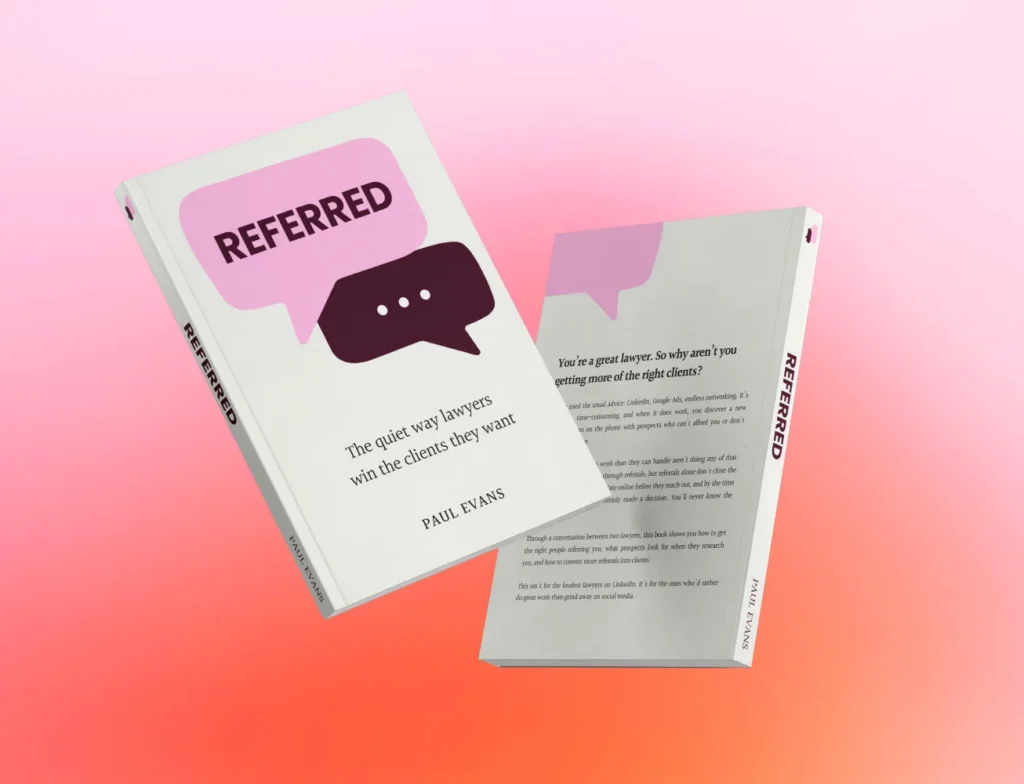
The world got loud. Then AI made noise the default. For lawyers who grow on referrals, that changes less than it seems, and matters more than ever. A new book from Toro’s Paul Evans makes the case.
Is ‘be everywhere’ really the best advice?
For a decade, the marketing advice handed to lawyers has been some version of the same instruction: be everywhere.
Post more, publish more, show up in every feed, build an audience. It was always an awkward fit for senior lawyers who are busy doing the work and wary of self-promotion. Now it doesn’t even work for the people who manage it.
The reason is noise. Every channel that once rewarded showing up is now saturated, and AI has poured fuel on it. Anyone can generate a competent-looking article in seconds, so everyone does. The feeds are fuller, the inboxes heavier, and the marginal post lands with less weight than it did a year ago. Being heard above that is harder work for a smaller return.
Which raises the question the noise was always drowning out: for a firm that grows on relationships, what actually works?
The answer hasn’t changed. The best work still comes through referrals. A general counsel facing a deal, a founder being sued, a business owner who needs an adviser they can trust, they don’t search for a lawyer. They ask someone they trust, and they act on the name they’re given. For firms acting for organisations and discerning private clients, referrals aren’t one channel among many. They’re the channel, and no amount of noise has displaced them.
What has changed is what happens after the referral
The name used to be enough. A trusted introduction carried the prospect most of the way to the call. It doesn’t anymore. Today the referred prospect does something in between: they look you up. They read your profile, they check what you’ve written, they form a view in private before they ever pick up the phone. The referral gets them to your name. The evidence they find decides whether they call or quietly go back for another.
That second step is where most firms leak. They’ve earned the referral, then left the evidence to chance, a thin profile, an out-of-date bio, nothing that confirms what the referrer promised. The prospect looks, isn’t reassured, and moves on. The lawyer never knows the referral happened at all.
This is the gap Referred is written to close
It sets out how high-value clients actually buy legal services, ask someone trusted, check the evidence, then call or walk away, and what a lawyer has to do at each step to win the work. How to focus on the clients worth wanting. How to build the evidence that confirms a referral instead of undermining it. How to identify who refers work like yours, and how to stay top of mind with them. It’s a system for the quiet way lawyers win, set against a world that keeps telling them to be loud.
It’s written as a conversation between two lawyers, one who’s struggling to grow her practice and one who’s worked it out, because the ideas land better talked through than lectured. Most readers finish it in about an hour, and nine exercises throughout turn the reading into a plan for their own practice.
The noisier the world gets, the more the quiet way stands out.
That was true before AI, and it’s only become more so since. Referred is the case for backing the thing that still works, and the playbook for doing it deliberately.
Referred: the quiet way lawyers win the clients they want is available now. Get your copy here.